

In this episode of The Ten Files, we dive into ten infamous cases that were officially declared hoaxes—but where unanswered questions, partial confessions, and curious details continue to fuel debate. These stories aren’t just about deception; they’re about how society, science, and media decide what to believe… and what to dismiss. From lighthearted pranks to scandals that shaped history, join us as we revisit these classics and ask: was the “hoax” label the full truth?
Watch the video:
Number 10: The Swiss Spaghetti Harvest
On April 1, 1957, the BBC’s flagship current affairs program Panorama broadcast a three-minute segment depicting Swiss families in Ticino carefully harvesting strands of spaghetti from trees. The narration, delivered in perfect seriousness, explained the challenges of the annual crop, including threats from the “spaghetti weevil.” Hundreds of viewers phoned the BBC asking how to grow their own spaghetti trees. The network later confirmed it was an elaborate April Fools’ Day joke orchestrated by cameraman Charles de Jaeger.
While harmless on the surface, the broadcast became a landmark in media studies, illustrating how authority and realistic visuals could convince even skeptical audiences of absurdity. In an era before widespread television, it highlighted emerging questions about trust in broadcast media.
More reading: Wikipedia – Spaghetti-tree hoax

Number 9: The Cardiff Giant
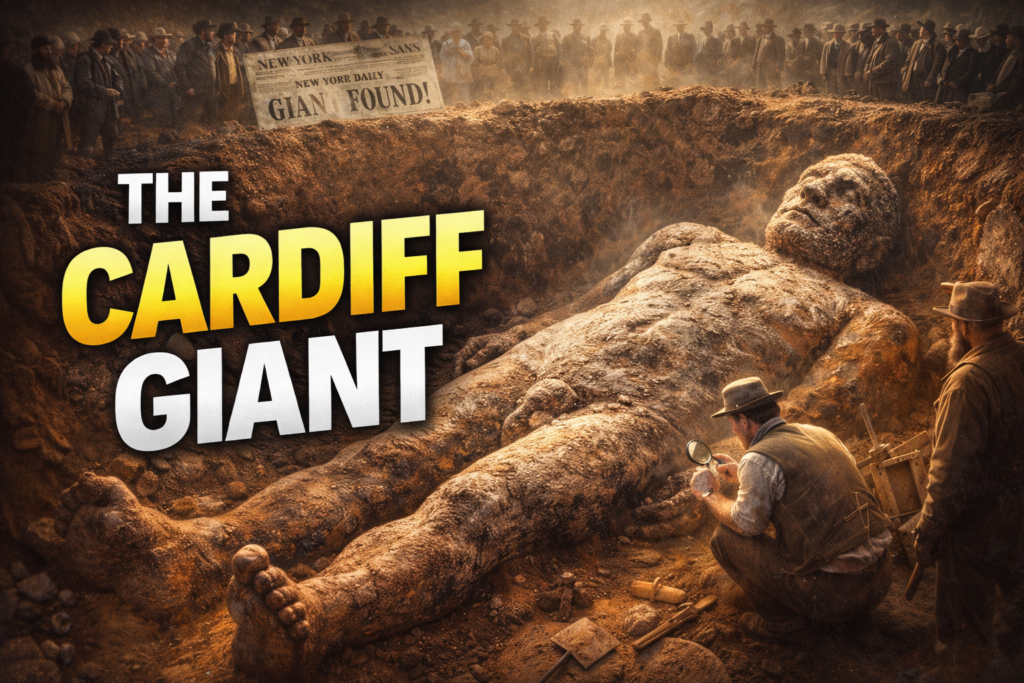
In October 1869, workers digging a well on a farm near Cardiff, New York, uncovered what appeared to be a 10-foot petrified human body. Dubbed the Cardiff Giant, it drew massive crowds willing to pay admission, sparked sermons about biblical giants, and fueled scientific debates about ancient races in America. Showman P.T. Barnum even created a replica for his own exhibit.
The truth emerged when George Hull, a New York tobacconist, admitted commissioning the gypsum carving and burying it as a scheme to mock religious literalists and make money. Despite the confession, the public’s eagerness to believe reflected a cultural fascination with lost civilizations and giant myths found worldwide.
More reading: Wikipedia – Cardiff Giant
Number 8: The Cottingley Fairies
Between 1917 and 1920, cousins Elsie Wright (16) and Frances Griffiths (9) produced five photographs showing themselves interacting with winged fairies in the garden of their Cottingley home in Yorkshire, England. The images gained credibility when Sir Arthur Conan Doyle, creator of Sherlock Holmes and a spiritualist, championed them in The Strand Magazine as evidence of the supernatural.
In the early 1980s, the elderly women admitted staging four photos using cardboard cutouts inspired by a book. However, Frances insisted until her death in 1986 that the fifth photograph—depicting fairies without prepared props—was genuine. The case remains a touchstone for discussions about childhood imagination, belief, and photographic evidence.
More reading: Wikipedia – Cottingley Fairies

Number 7: The War of the Worlds Broadcast
On October 30, 1938, Orson Welles and the Mercury Theatre on the Air adapted H.G. Wells’ novel as a series of realistic news bulletins announcing a Martian invasion in New Jersey. Reports claimed widespread panic—people fleeing homes, clogging roads, and even contemplating suicide. Newspapers amplified the hysteria to criticize radio’s power.
Later studies revealed the panic was overstated by print media rivals, but genuine fear did occur among some listeners who tuned in late. The U.S. government analyzed the event for insights into mass communication and propaganda potential during rising global tensions.
More reading: Wikipedia – The War of the Worlds (1938 radio drama)

Number 6: The Tasaday Tribe
In 1971, Philippine official Manuel Elizalde announced the discovery of the Tasaday—a peaceful, cave-dwelling group in Mindanao with no metal tools, agriculture, or knowledge of war. Featured in National Geographic and studied by anthropologists, they symbolized a “lost” Stone Age society untouched by modernity.
After the fall of Ferdinand Marcos in 1986, journalists found tribe members wearing modern clothing and living in houses, claiming the isolation was staged for conservation funding and political purposes. However, linguistic analysis confirmed their dialect was unique, suggesting genuine long-term isolation that may have been exaggerated rather than fabricated.
More reading: Wikipedia – Tasaday controversy

Number 5: The Hitler Diaries
In 1983, German magazine Stern paid nearly 10 million marks for 60 handwritten volumes purportedly penned by Adolf Hitler between 1932 and 1945. Initial handwriting experts authenticated them, and historians prepared major revelations.
Forensic tests quickly proved the diaries fake—modern paper, ink, and factual errors copied from published sources. Forger Konrad Kujau and journalist Gerd Heidemann were imprisoned. Yet some entries contained details not widely known at the time, raising speculation about embedded real information.
More reading: Wikipedia – Hitler Diaries

Number 4: The Balloon Boy Hoax
On October 15, 2009, a large silver Mylar balloon launched from the Heene family home in Colorado was reported to be carrying six-year-old Falcon. Live television tracked the craft for hours while emergency services mobilized and airports diverted flights.
Falcon was found hiding in the attic; the parents later admitted on CNN it was a publicity stunt to land a reality TV deal. They faced charges. The incident sparked debate about media sensationalism and emergency resource allocation.
More reading: Wikipedia – Balloon boy hoax

Number 3: The Piltdown Man
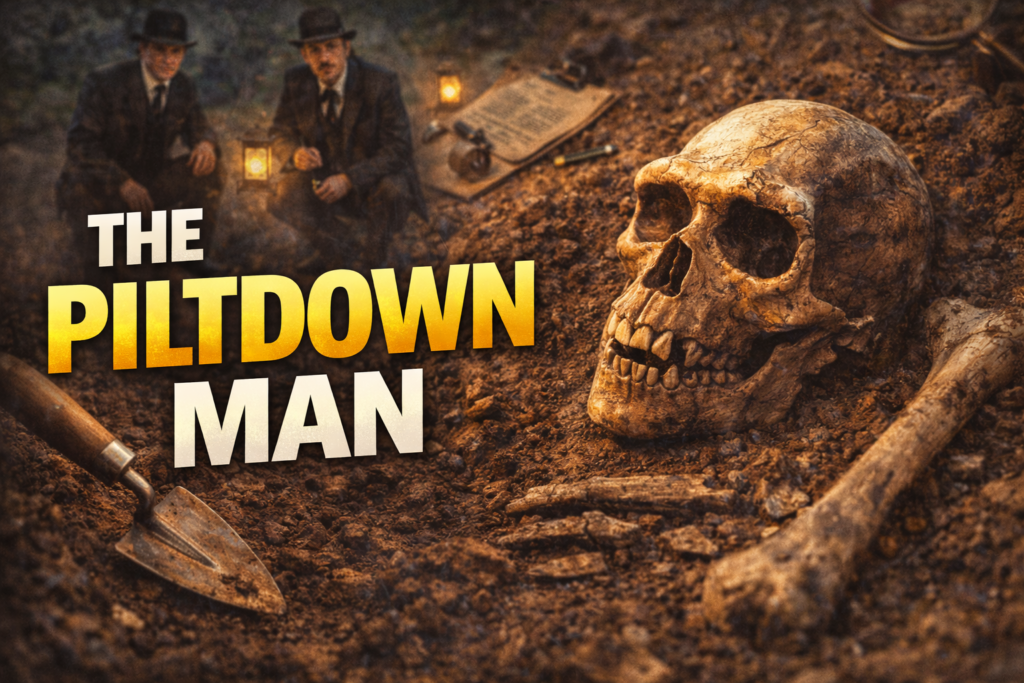
Announced in 1912, fragments from Piltdown, England, combined a human-like skull with an ape-like jaw—heralded as the “missing link” in human evolution. It influenced textbooks and theories for 40 years, supporting ideas of European origins for humanity.
In 1953, modern tests revealed the bones were stained and assembled from different species. The perpetrator remains unknown, though suspicion fell on discoverer Charles Dawson. Early skeptics were ignored because the find fit prevailing biases.
More reading: Wikipedia – Piltdown Man
Number 2: The Surgeon’s Photo of Loch Ness Monster
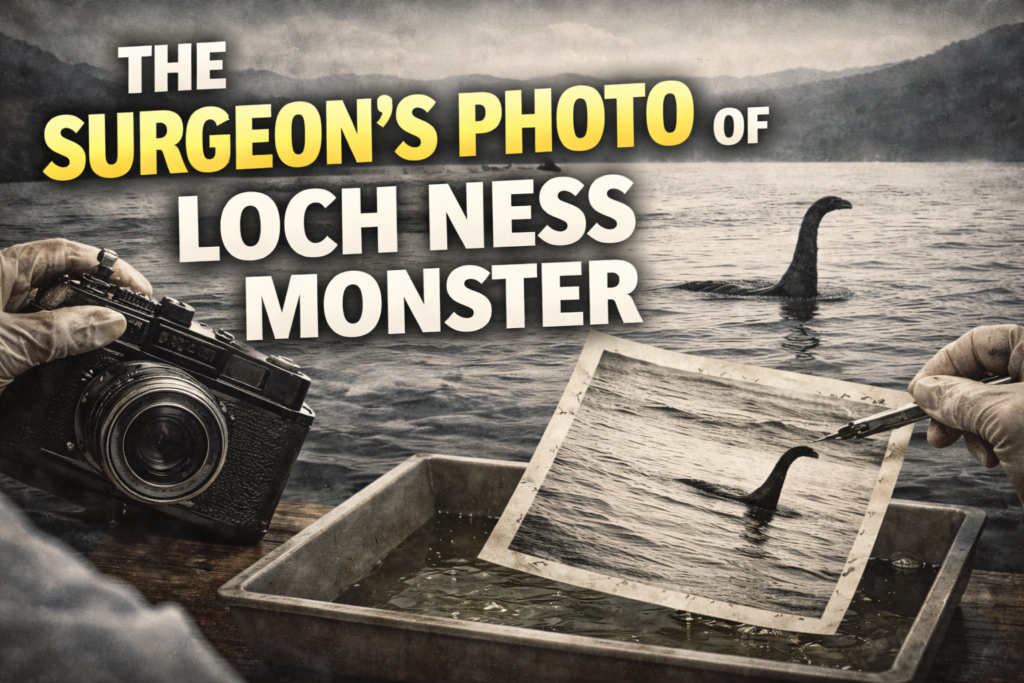
Published in the Daily Mail on April 21, 1934, a photograph by London gynecologist Robert Kenneth Wilson showed what appeared to be a long-necked creature rising from Loch Ness. It became the iconic image fueling global Nessie mania.
In 1994, Christian Spurling confessed on his deathbed to creating a toy submarine with a sculpted head for big-game hunter Marmaduke Wetherell as revenge against the Mail. Despite the admission, consistent sightings before and after, plus modern sonar data, keep speculation alive.
More reading: Wikipedia – Surgeon’s photograph
Number 1: The Patterson-Gimlin Bigfoot Film
On October 20, 1967, Roger Patterson and Bob Gimlin filmed 59 seconds of a large, hairy bipedal figure striding across a creek bed in Bluff Creek, California. Known as “Patty,” the subject displays fluid movement, visible muscle definition, and proportions unlike typical humans.
Costume claims have persisted, but high-resolution analysis and biomechanics experts note details difficult to replicate in 1960s effects—including breast movement and foot flex. Alleged confessions were later recanted or disputed. The footage remains the most scrutinized—and divisive—piece of cryptid evidence ever captured.
More reading: Wikipedia – Patterson–Gimlin film

Which of these cases makes you question the official story most? Let us know in the comments below, and check out more episodes on The Ten Files for real stories that challenge belief.

0 Comments