The Ten Files

File 027 / Conspiracies / Opened October 12, 2026

Ten Official Stories That Still Don't Add Up

Some official stories close a case without settling it. This file collects ten deaths, crashes and attacks where an authority gave an answer, but documented anomalies and serious independent evidence still pull against it: missing records, contradictory findings, witnesses set aside, forensic reviews that disagreed. Each entry lays out the official account and who gave it, then the strongest evidence from outside it. The verdicts rule on the evidence, not on suspicion. Unsolved means no accepted answer; unproven means real doubts that have not been established; solved means the official account holds despite loose ends.

  1. ?
  2. S
  3. ?
  4. U
  5. ?
  6. U
  7. S
  8. U
  9. ?
  10. U
  • 2 solved
  • 4 unsolved
  • 4 unproven

Each square is a case and its verdict. 26 sources cited. How we decide verdicts

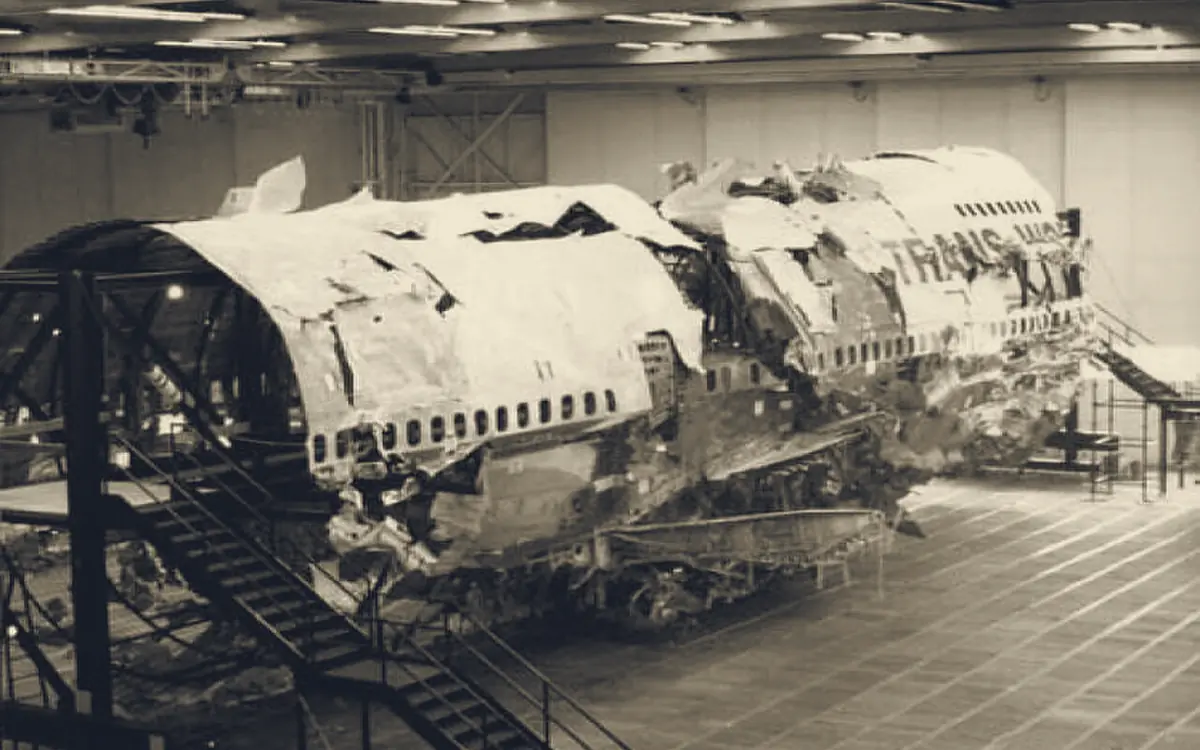
The reconstructed fuselage of TWA Flight 800 inside the NTSB investigators' hangar in Calverton, New York
Photo: National Transportation Safety Board, Public domain (U.S. government work)
Case 01New York, Washington, D.C., and Florida2001–2010

The Anthrax Letters

In the weeks after September 11, 2001, letters carrying anthrax spores reached newsrooms and the U.S. Senate. The first batch, postmarked in Trenton, New Jersey, on September 18, went to media outlets including NBC News and the New York Post. Two more, dated October 9, were addressed to Senators Tom Daschle and Patrick Leahy. Five people died and at least 17 others were sickened. The FBI investigation, called Amerithrax, spent years on a different scientist, who was publicly labeled a person of interest and later exonerated; in June 2008 the Justice Department settled his lawsuit for $5.8 million.

The FBI's final answer was Bruce Ivins, an anthrax researcher at the Army's Fort Detrick laboratory in Maryland. Ivins died by suicide on July 29, 2008, as prosecutors were drafting charges, and the case was formally closed on February 19, 2010. The core evidence was genetic: four mutations linked the letter spores to a flask in Ivins's lab labeled RMR-1029. The FBI later counted 419 people who had access to that lab or had received samples from the flask.

Outside reviews were cooler. In 2011 a National Research Council committee, which the FBI had requested, said science alone could not settle where the spores came from and that alternatives were not fully tested. In 2014 the Government Accountability Office found the FBI's genetic testing lacked consistent standards. The FBI says science was not the sole basis for its conclusion. No court ever weighed the case.

Red flags: 1 of 6 What these mean

  • Records destroyed or withheld

    The 2011 National Research Council committee did not review classified materials and recommended further review of classified FBI and Justice Department work it could not examine. Source

  • Official story changed
  • Investigated by the accused
  • Evidence held by an interested party
  • Denied, then admitted
  • Witnesses dismissed
UNPROVENnever tested in court

Verdict: UnprovenThe FBI's case against Ivins was never tried, and independent reviews found its science not definitive; neither his guilt nor any alternative has been established.

Your call on unproven?
Sources (3)
Case 02Off East Moriches, New York1996

TWA Flight 800

On the evening of July 17, 1996, TWA Flight 800, a Boeing 747 bound for Paris, exploded about eight miles south of East Moriches, Long Island, shortly after leaving Kennedy Airport. All 230 people aboard died, 212 passengers and 18 crew. Many people on shore and on boats described a streak of light rising toward the jet before a fireball, and some early accounts spoke of a missile. For more than two years the FBI ran a criminal investigation alongside the National Transportation Safety Board.

In 2000 the NTSB ruled that fuel vapor in the center wing fuel tank exploded. It said the source of ignition could not be determined with certainty; the most likely candidate was a short circuit outside the tank that sent excess voltage into fuel gauge wiring. Investigators attributed the streak witnesses saw to burning fuel from the stricken airplane. Traces of explosives did turn up on three wreckage samples, and the NTSB could not pin down their source, pointing to possible contamination from the jet's 1991 Gulf War troop flights or a canine training exercise about a month earlier.

In 2013 a documentary team that included former investigators petitioned the board to reopen the case, citing radar data. In July 2014 the NTSB, using staff not involved in the original probe, rejected the petition, noting that no missile fragments were ever found and that the damage pattern fit a fuel tank blast. The FAA later issued a 2008 rule to reduce fuel tank flammability.

SOLVEDignition source: unknown

Verdict: SolvedRebuilt wreckage, no missile fragments and a fuel tank damage pattern support the NTSB, though the exact ignition source and the explosive traces were never fully explained.

Your call on solved?
Sources (3)
Case 03Near Crescent, Oklahoma1974

Karen Silkwood

Karen Silkwood was 28, a laboratory technician at Kerr-McGee's Cimarron River nuclear fuel plant in Oklahoma, and she was trying to expose safety violations there. In the week before she died, she was contaminated with plutonium at work on three straight days, and traces turned up in her apartment. On the night of November 13, 1974, she set out to meet New York Times reporter David Burnham and a union investigator in Oklahoma City.

She never arrived. Her car crashed into a concrete abutment on State Highway 74, about seven miles south of Crescent. State and federal investigators called it a single-vehicle accident, at first attributed to her falling asleep after taking a sedative. The Justice Department, which ended its inquiry in 1978, later said there was not enough evidence that she had been asleep. The documents she reportedly carried, said to show the plant was unsafe, were never found.

A. O. Pipkin Jr., an accident investigator hired by the union, reported dents in the rear fender and bumper that he said the abutment could not have made, and steering wheel damage suggesting she was conscious. Those findings were never tested in a criminal case. Her estate sued over the contamination and won $10.5 million in 1979; the award was cut on appeal, reinstated in 1984, and settled in 1986 for $1.38 million.

Red flags: 1 of 6 What these mean

  • Records destroyed or withheld
  • Official story changed

    Investigators first attributed the crash to Silkwood falling asleep after taking a sedative; the Justice Department later said the evidence that she was asleep was insufficient. Source

  • Investigated by the accused
  • Evidence held by an interested party
  • Denied, then admitted
  • Witnesses dismissed
UNPROVENthe folder never turned up

Verdict: UnprovenThe crash was ruled an accident, but a union-hired investigator reported rear-end damage, her papers vanished, and no released evidence settles whether another car was involved.

Your call on unproven?
Sources (2)
Case 04Off southern Ireland1915

The Lusitania's Second Explosion

On May 7, 1915, the German submarine U-20 torpedoed the British liner Lusitania off the south coast of Ireland, six days out of New York. A second, violent explosion followed the torpedo strike, and the ship sank in about 18 minutes. Nearly 1,200 people died, more than 120 of them Americans, and British propaganda used the sinking to turn American opinion against Germany.

Britain's account had two parts. The government maintained the ship carried no explosives on her final voyage, and its 1915 inquiries favored a second torpedo to explain the second blast. But the U-20's war diary and the testimony of its crew record a single torpedo. The ship was known to carry small-arms ammunition for the British Army, and a diving team working on a 2012 documentary cut into the hull and found it.

Robert Ballard's 1993 expedition found no sign of an explosion in the magazine area and no evidence of a boiler blast, and he concluded that coal dust in a nearly empty bunker probably ignited. Others argue for a ruptured steam line or the cargo itself. Then, in 2014, Britain's National Archives released files showing that in 1982 officials feared a survey of the wreck could reveal munitions, and that the Ministry of Defence warned divers it might contain explosives. The wreck lies on its side with the torpedo damage against the seabed, so the hole that could settle the question is hidden.

Red flags: 1 of 6 What these mean

  • Records destroyed or withheld
  • Official story changed
  • Investigated by the accused
  • Evidence held by an interested party
  • Denied, then admitted

    The British government always maintained Lusitania carried no explosives; in 1982 the Ministry of Defence warned divers the wreck could contain them, files released in 2014 show. Source

  • Witnesses dismissed
UNSOLVEDone torpedo, two blasts

Verdict: UnsolvedOne torpedo hit, not two, and the cause of the fatal second blast is still unknown; released British files show officials feared what the wreck might reveal.

Your call on unsolved?
Sources (3)
Case 05New York City1965

Dorothy Kilgallen

Dorothy Kilgallen was one of the best-known journalists in America, a newspaper columnist and a regular panelist on the TV game show What's My Line? She covered the 1964 trial of Jack Ruby, the man who shot Lee Harvey Oswald, and is reported to be the only reporter who ever interviewed him. She also published Ruby's closed-door testimony to the Warren Commission before its official release, and, by author Mark Shaw's account, spent about 18 months on her own inquiry into the Kennedy assassination.

On November 8, 1965, the morning after a What's My Line? broadcast, she was found dead in her Manhattan townhouse. She was 52. The medical examiner attributed her death to a mix of alcohol and barbiturates and ruled it accidental. Shaw, who has written two books on the case, says the death drew no real investigation at the time.

Shaw cites National Archives records showing two additional barbiturates in her system, residue on a glass by her bed, and FBI files, obtained through Freedom of Information requests, showing the bureau kept her under surveillance. Her assassination research files have never been found. In 2017 the Manhattan district attorney's office opened a review at Shaw's urging and dropped it about eight months later, citing no evidence of murder; witnesses were reportedly not interviewed. In 2024, the NYPD and the district attorney declined a city councilman's request to reopen the case.

Red flags: 1 of 6 What these mean

  • Records destroyed or withheld
  • Official story changed
  • Investigated by the accused
  • Evidence held by an interested party
  • Denied, then admitted
  • Witnesses dismissed

    The Manhattan district attorney's 2017 review was dropped after about eight months without witnesses being interviewed, according to reporting on the case. Source

UNPROVENher files never surfaced

Verdict: UnprovenThe accidental overdose finding has never been overturned, and the case for foul play rests largely on one author's research; her missing files and a thin original inquiry keep doubts alive.

Your call on unproven?
Sources (2)
Case 06Stockholm, Sweden1986

The Murder of Olof Palme

Olof Palme, Sweden's prime minister, considered himself safe on the streets of Stockholm and often went without bodyguards. On the night of February 28, 1986, as he and his wife, Lisbet, left a movie theater, a gunman shot him dead and escaped. Investigators never recovered the gun, and found no DNA or footprints to work with. For Americans, imagine a president shot on a downtown sidewalk and the case staying open for 34 years.

The investigation grew into one of the largest murder files in the world: about 90,000 people, more than 10,000 interviews and 134 confessions. Its first leader was widely blamed for chasing dead ends in the early days. The only man ever tried for the killing was acquitted.

On June 10, 2020, chief prosecutor Krister Petersson named a new prime suspect, a man who had been near the scene as a witness and who died in 2000, and closed the case because a dead man cannot be charged. The decision rested on re-examining old witness testimony and the man's shifting accounts of his movements, not on new technical evidence, and investigators acknowledged they lacked the evidence to convict him in court. Petersson also said it was no longer possible to investigate whether there had been a wider conspiracy. Other theories never went away; in March 2020, South Africa had given Swedish investigators a dossier on a possible role for its apartheid-era security services.

Red flags: 1 of 6 What these mean

  • Records destroyed or withheld
  • Official story changed

    Police first built a case against a man who was tried and acquitted; in June 2020 prosecutors named a different man, who had died in 2000. Source

  • Investigated by the accused
  • Evidence held by an interested party
  • Denied, then admitted
  • Witnesses dismissed
UNSOLVEDno weapon, no trial

Verdict: UnsolvedProsecutors closed the case by naming a dead man they could not have convicted; no weapon, forensic link or court verdict supports any answer.

Your call on unsolved?
Sources (2)
Case 07Oxfordshire, England2003

The Death of David Kelly

In 2003, Britain's government was under fire over its case for joining the Iraq war. A BBC report questioned the accuracy of a government dossier on Iraq's weapons, and David Kelly, a government weapons expert, was revealed as a source for the story. Shortly afterward his body was found in woods near his Oxfordshire home.

Prime Minister Tony Blair announced a public inquiry under a senior judge, Lord Hutton, rather than the usual coroner's inquest, and the government ruled the inquiry could take the inquest's place. Hutton concluded in 2004 that Kelly had taken his own life. He also asked that the postmortem report be kept private for 70 years, to protect Kelly's family. Critics, including a group of campaigning doctors, objected that the inquiry spent only about half a day of its 24 days on the cause of death, without the formal rules of an inquest.

In October 2010, the Ministry of Justice published the postmortem and toxicology reports. The pathologist found the injuries typical of self-harm and found no defensive wounds. One of six doctors who had publicly questioned the cause of death said the reports convinced him it was suicide, though he still objected to the process. In June 2011 the attorney general, Dominic Grieve, called the evidence of suicide overwhelmingly strong and declined to seek an inquest. Campaigners called that a whitewash, but they produced no new physical evidence, and no coroner has ever heard the case.

Red flags: 1 of 6 What these mean

  • Records destroyed or withheld

    Lord Hutton asked that Kelly's postmortem report stay private for 70 years; the Ministry of Justice published it in October 2010, about six years after the inquiry ended. Source

  • Official story changed
  • Investigated by the accused
  • Evidence held by an interested party
  • Denied, then admitted
  • Witnesses dismissed
SOLVEDno inquest was ever held

Verdict: SolvedThe released medical reports strongly support suicide; the lasting problem is process, since the death never received a full inquest and the reports were meant to stay sealed.

Your call on solved?
Sources (2)
Case 08London, England2010

Gareth Williams

Gareth Williams was a 31-year-old codebreaker working for MI6, Britain's foreign intelligence service. On August 23, 2010, police found him dead inside a padlocked holdall in the bathtub of his flat in Pimlico, central London. He had failed to turn up for work, but MI6 did not report him missing for seven days. The coroner later said she could only speculate about what that delay cost the investigation.

In May 2012, coroner Fiona Wilcox found that, on the balance of probabilities, he had been unlawfully killed. She said she was sure another person had locked the bag, and that possible involvement by the intelligence services remained a legitimate line of inquiry. Pathologists could not establish a cause of death. The inquest also heard of a DNA mix-up by a forensic contractor, and MI6 handed evidence to police late. The head of MI6 apologized to the family.

In November 2013, after further forensic work and interviews with 27 intelligence staff, the Metropolitan Police said Williams had probably died alone in an accident and that foul play was virtually ruled out. Detectives conceded they still could not explain how he got into the bag and locked it without leaving his DNA or handprints on the bath. The coroner accepted the new findings but saw too little new evidence to reopen her inquest. His family said it was still impossible to say with certainty how he died.

Red flags: 1 of 6 What these mean

  • Records destroyed or withheld
  • Official story changed

    The coroner found probable unlawful killing in May 2012; in November 2013 the Metropolitan Police said Williams's death was probably an accident. Source

  • Investigated by the accused
  • Evidence held by an interested party
  • Denied, then admitted
  • Witnesses dismissed
UNSOLVEDtwo official answers

Verdict: UnsolvedA coroner found probable unlawful killing; police later found probable accident; neither explained the locked bag, and the cause of death was never established.

Your call on unsolved?
Sources (3)
Case 09New York City2019

Jeffrey Epstein's Death

Jeffrey Epstein, the financier awaiting trial on federal sex trafficking charges, was found dead in his cell at the Metropolitan Correctional Center in Manhattan on August 10, 2019, a little over a month after he arrived there. He was 66. New York City's chief medical examiner, Dr. Barbara Sampson, ruled the death a suicide, and federal officials have backed it since.

The failures surrounding that night are well documented. Because of an earlier incident, Epstein was supposed to share a cell, but no cellmate was assigned. At least two officers assigned to check on him overnight did not do so, and they were criminally charged with falsifying records; their prosecutions were later deferred. Security cameras did not work properly. In June 2023 the Justice Department's inspector general blamed negligence, misconduct and long-running staffing problems, and found no evidence that he was murdered.

The doubts come from two places. Dr. Michael Baden, a former New York City chief medical examiner hired by Epstein's family, attended the autopsy and said certain neck injuries were more typical of homicide than suicide, while calling his view not conclusive. Sampson stood firmly by her ruling, and other experts note such injuries do occur in suicides, more often in older people. Then, in July 2025, the government released jail video it described as raw. Wired's analysis of the file's metadata found that nearly three minutes appeared to have been cut, and Attorney General Pam Bondi attributed a missing minute near midnight to a nightly system reset. What the gap would show is unknown.

Red flags: 2 of 6 What these mean

  • Records destroyed or withheld

    Security cameras failed on the night Epstein died, and a 2025 Wired metadata analysis found nearly three minutes cut from video officials described as raw. Source

  • Official story changed
  • Investigated by the accused

    The 2023 review of the jail's failures was conducted by the Justice Department's own inspector general, examining the Bureau of Prisons within the same department. Source

  • Evidence held by an interested party
  • Denied, then admitted
  • Witnesses dismissed
UNPROVENfalsified logs, dead cameras

Verdict: UnprovenEvery official review found suicide and no released evidence shows otherwise, but falsified logs, failed cameras and an edited video leave the public record incomplete.

Your call on unproven?
Sources (3)
Case 10Ndola, Zambia1961–present

The Death of Dag Hammarskjöld

Shortly after midnight on September 18, 1961, a chartered DC-6 carrying United Nations Secretary-General Dag Hammarskjöld crashed in a forest near Ndola, in what was then the British protectorate of Northern Rhodesia and is now Zambia. Hammarskjöld, 56, was on a peacekeeping mission to the Congo, where the mineral-rich province of Katanga had broken away and was fighting UN troops. Fifteen people died in the crash, and the one survivor died six days later.

Rhodesian inquiries in 1961 and 1962 blamed pilot error, largely by eliminating other causes, and were criticized for not taking local African witnesses seriously. A 1962 UN inquiry returned an open verdict, unable to rule out sabotage or attack. Witnesses described seeing more than one aircraft, possibly a jet, and a plane on fire or under fire.

The case reopened slowly. In 2013 an independent commission of four senior jurists found persuasive evidence that the plane was attacked or threatened in some way. A UN expert panel followed in 2015, and former Tanzanian chief justice Mohamed Chande Othman has led the UN's review since. His reports found an external attack or threat plausible, pointed to probable intercepts of radio traffic by member states and to foreign paramilitary and intelligence personnel in the area, and in 2019 named Britain, Russia, South Africa and the United States among states that may be holding back information. In 2024 he reported that an attack remains plausible, alongside sabotage or human error, and that some governments still had not given specific answers.

Red flags: 2 of 6 What these mean

  • Records destroyed or withheld

    Othman's 2019 report named Britain, Russia, South Africa and the United States as possibly withholding information; in 2024 some states still had not given specific answers. Source

  • Official story changed
  • Investigated by the accused
  • Evidence held by an interested party
  • Denied, then admitted
  • Witnesses dismissed

    The 1961 and 1962 Rhodesian inquiries, which blamed pilot error, were criticized for not taking Zambian witness testimony seriously. Source

UNSOLVEDsixteen aboard. still open.

Verdict: UnsolvedUN-appointed reviewers find an attack or threat plausible, but key intelligence records remain unreleased; pilot error, sabotage and attack are all still possible.

Your call on unsolved?
Sources (3)

None of these files proves a cover-up, and some official answers hold up well. What they share is a record with holes in it, and the holes are documented. The honest move is to keep the case open until the missing pieces are released.

Which case is the strangest?

Cast your vote to see how everyone else ruled.

Think you'd ace the quiz?

Try the History Quiz on our sister site, QuizPlays.

Play the quiz

Pass this file along

Know someone who'd argue with a verdict?