The Ten Files

File 026 / Conspiracies / Opened October 12, 2026

Ten Times Outsiders Beat the Official Story

Most cover-ups are not cracked by declassification. They are cracked by outsiders: a newspaper team that sues to unseal court files, a pediatrician who checks children's blood, a veteran who writes letters to Washington, families who refuse to accept an inquest verdict. This file collects ten times outsiders exposed the truth while officials denied, minimized or buried it. Each case says who the outsiders were, what authorities claimed at the time, and what finally proved it, from court rulings to official admissions. The verdicts, for once, mostly agree: confirmed.

  1. C
  2. C
  3. C
  4. C
  5. C
  6. C
  7. C
  8. C
  9. C
  10. C
  • 10 confirmed

Each square is a case and its verdict. 29 sources cited. How we decide verdicts

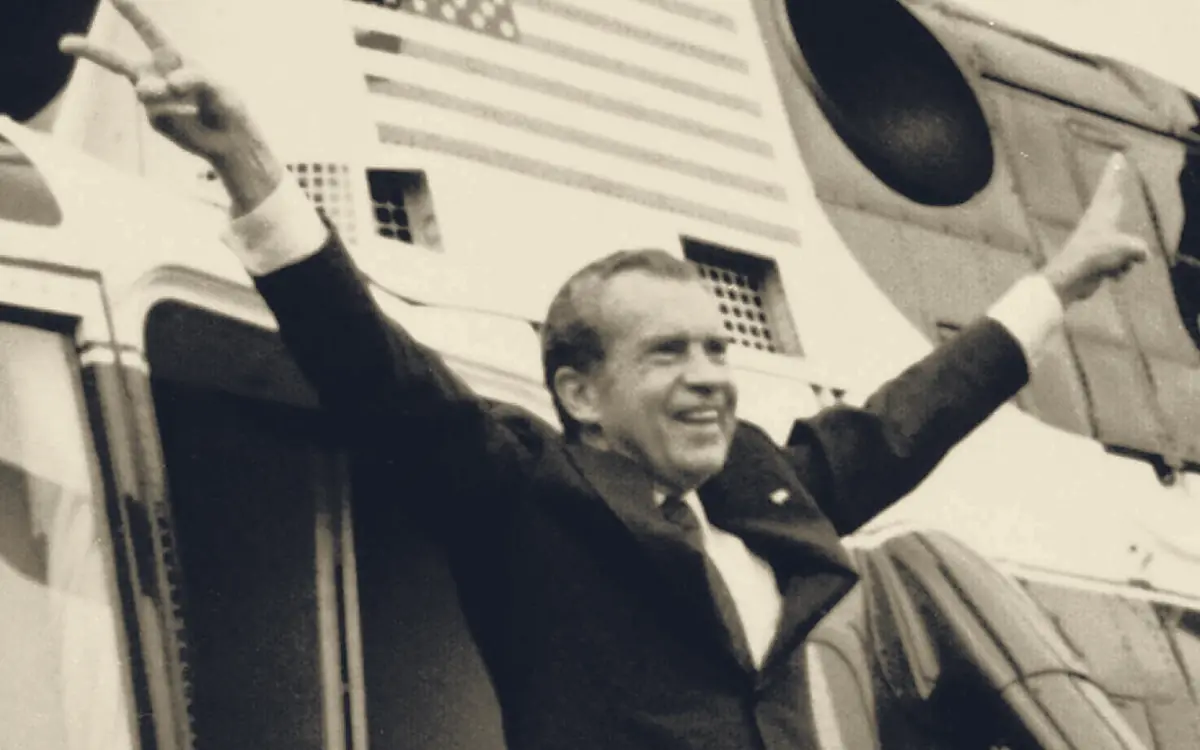
Richard Nixon waving from the steps of the presidential helicopter as he leaves the White House after resigning, August 9, 1974
Photo: White House Photo Office (Ollie Atkins), 1974, via Richard Nixon Library, Public domain
Case 01Boston, Massachusetts2001–2003

The Boston Globe Spotlight Team

On January 6, 2002, The Boston Globe's Spotlight team published a story the Archdiocese of Boston had spent years keeping out of public view. More than 130 people had come forward since the mid-1990s to say a former priest, John J. Geoghan, abused them as children, across roughly three decades and a half-dozen parishes. The church had quietly settled about 50 lawsuits over him for more than $10 million, and the key records stayed confidential.

The paper trail made the story impossible to wave away. At the Globe's request, Judge Constance M. Sweeney ordered sealed court documents released in November 2001, and the archdiocese lost its appeal. The records showed that Cardinal Bernard Law was told in September 1984 that Geoghan had been accused of molesting seven boys, and that two months later he approved Geoghan's transfer to a parish in Weston. A bishop protested the move in writing that December. Law did not pull Geoghan from parish work until 1993.

The fallout reached far beyond one priest. Law resigned as archbishop in December 2002. A report by Massachusetts Attorney General Thomas F. Reilly found that 250 priests and other archdiocesan workers had allegedly abused at least 789 minors since 1940, and the archdiocese agreed to pay $85 million to settle claims from 540 people. The Globe won the 2003 Pulitzer Prize for Public Service.

Red flags: 2 of 6 What these mean

  • Records destroyed or withheld

    Church lawyers kept most evidence on Geoghan's supervision under a court confidentiality seal in 84 civil suits until a judge ordered release in November 2001. Source

  • Official story changed
  • Investigated by the accused
  • Evidence held by an interested party
  • Denied, then admitted
  • Witnesses dismissed

    Bishop John M. D'Arcy protested Geoghan's transfer in a December 1984 letter; Geoghan stayed in parish work until 1993. Source

CONFIRMEDthe files were there all along

Verdict: ConfirmedThe archdiocese's own files, released by court order, confirmed that leaders knew of abuse allegations and reassigned an accused priest; the attorney general's report confirmed the scale.

Your call on confirmed?
Sources (3)
Case 02Flint, Michigan2014–2016

The Flint Water Testers

To save money while the city was under state financial control, Flint switched its water supply to the Flint River on April 25, 2014. Residents complained almost at once that the water looked, smelled and tasted wrong, and reported rashes and hair loss. Officials kept saying it was safe. Meanwhile no corrosion-control treatment was being added, so lead leached from the city's aging pipes.

Outsiders did the testing that settled the question. LeeAnne Walters, a mother whose children became sick, took her concerns to state and federal regulators and reached Virginia Tech water expert Marc Edwards. His team's 2015 sampling of 252 homes found nearly 17 percent above the federal lead action level of 15 parts per billion. On September 24, 2015, Dr. Mona Hanna-Attisha of Hurley Medical Center released an analysis showing the share of young children with elevated blood lead had nearly doubled after the switch. State officials publicly attacked her data and accused her of stirring up panic.

Within weeks the state's own analysis came to agree with hers, and Flint went back to Detroit water on October 16, 2015. A 2017 settlement required lead line replacement, and a $626 million civil settlement followed. Criminal charges were filed against officials, including former Gov. Rick Snyder in 2021, but the attorney general's office ended the prosecutions in 2023 after court setbacks, and none of the senior officials charged faced criminal penalties.

Red flags: 2 of 6 What these mean

  • Records destroyed or withheld
  • Official story changed
  • Investigated by the accused
  • Evidence held by an interested party
  • Denied, then admitted

    State officials insisted Flint's water was safe and attacked Hanna-Attisha's September 2015 findings, then concluded their own data was consistent with hers. Source

  • Witnesses dismissed

    Residents' complaints of foul water, rashes and hair loss after the April 2014 switch were discounted while officials maintained the water was safe. Source

CONFIRMEDthe pediatrician read the charts

Verdict: ConfirmedIndependent water sampling and a pediatrician's blood-lead analysis proved the contamination; the state's own data later matched, and it switched the water back.

Your call on confirmed?
Sources (3)
Case 03Washington, D.C., and New York1969–1973

The Pentagon Papers

In 1967, Defense Secretary Robert McNamara commissioned a secret history of American decision-making in Vietnam. The finished study ran to about 7,000 pages and was stamped top secret. Daniel Ellsberg, a RAND Corporation analyst who helped write it, came to believe the public deserved to read it. Starting in October 1969, he and his colleague Anthony Russo photocopied the report. For nearly two years Ellsberg offered copies to members of Congress, and none made them public.

So he went to New York Times reporter Neil Sheehan. The Times published its first installment on June 13, 1971. The study showed that U.S. involvement in the war had been greater than the government had publicly acknowledged. Two days later, the Nixon administration won a temporary injunction stopping further stories. On June 30, the Supreme Court ruled 6 to 3 in New York Times Co. v. United States that the government had not justified this prior restraint, and publication resumed.

Ellsberg and Russo were indicted on charges including Espionage Act violations. Then the government's own conduct sank the case. In September 1971, White House operatives had burglarized the office of Ellsberg's psychiatrist, and the case also exposed illegal wiretaps and destroyed documents. In May 1973, Judge William Byrne Jr. dismissed all charges, citing government misconduct. The full, unredacted report was finally released in 2011, 40 years after the leak.

Red flags: 1 of 6 What these mean

  • Records destroyed or withheld

    The study stayed classified for decades; the National Archives released the complete report only in 2011, with about 34 percent public for the first time. Source

  • Official story changed
  • Investigated by the accused
  • Evidence held by an interested party
  • Denied, then admitted
  • Witnesses dismissed
CONFIRMED7,000 pages, one copier

Verdict: ConfirmedThe report was authentic and is now fully public; it showed deeper U.S. involvement than officials admitted, and the case against the leakers collapsed over government misconduct.

Your call on confirmed?
Sources (3)
Case 04Quang Ngai Province, South Vietnam1968–1971

The My Lai Massacre

On March 16, 1968, soldiers of Charlie Company entered the hamlet of My Lai and killed between 347 and 504 unarmed civilians, by differing counts. An Army photographer, Ron Haeberle, went in with them. Then the official machinery closed over the event. An April 1968 inquiry by members of the 11th Infantry Brigade, the company's own parent unit, concluded that no massacre had occurred and no further action was needed. Accusations from a U.S. helicopter pilot, Hugh Thompson, and South Vietnamese reports of more than 500 dead were never properly investigated.

The truth came out because outsiders refused to let it go. Ron Ridenhour, a veteran who had heard about the killings from soldiers, wrote to Defense Secretary Melvin Laird and others in Washington in March 1969, and an investigation followed. On November 12, 1969, freelance reporter Seymour Hersh broke the story through Dispatch News Service, and more than 30 newspapers picked it up. Haeberle's photographs were published that same month.

An Army inquiry led by Lt. Gen. William R. Peers reported in March 1970 that the truth had been covered up within the Americal Division for a year, and recommended 30 people for possible charges. The Army brought charges against 25 men. Only Lt. William Calley was convicted, on March 29, 1971, of murdering 22 civilians. His life sentence was cut twice, and he was paroled in 1974 after spending most of that time under house arrest.

Red flags: 2 of 6 What these mean

  • Records destroyed or withheld
  • Official story changed
  • Investigated by the accused

    The April 1968 investigation was run by members of the 11th Infantry Brigade, Charlie Company's own brigade, and concluded that no massacre had occurred. Source

  • Evidence held by an interested party
  • Denied, then admitted
  • Witnesses dismissed

    The Peers inquiry found that Hugh Thompson's accusations and South Vietnamese reports of more than 500 civilian deaths were never properly investigated. Source

CONFIRMEDa letter, a freelancer, photos

Verdict: ConfirmedThe Army's own Peers inquiry confirmed the massacre and a year-long cover-up within the division, after a veteran's letter and a freelance reporter forced it into the open.

Your call on confirmed?
Sources (3)
Case 05Niagara Falls, New York1978–1980

Love Canal

In the 1940s and 1950s, Hooker Chemical dumped nearly 22,000 tons of chemical waste, including dioxin, PCBs and pesticides, into an old canal in Niagara Falls. In 1953 the company covered the site with earth and handed it over for one dollar. A school and about 100 homes went up there in the late 1950s, and a neighborhood grew around them.

By the 1970s residents were finding chemical puddles in yards and basements. Lois Gibbs, a young mother whose son became seriously ill after starting at the 99th Street School, began organizing neighbors in 1978. After a series of Niagara Gazette stories and a front-page New York Times report on the leaks, the state issued a health order that August and agreed to buy 239 homes nearest the canal, and President Carter approved emergency aid. Officials drew the line there.

Gibbs and Dr. Beverly Paigen, a Roswell Park cancer researcher, ran their own health survey beyond the evacuation zone and reported high rates of miscarriages and birth defects. Most state health officials dismissed it, and one belittled it as housewife data. In 1980, after further federal studies, Carter issued a second emergency declaration, and more than 800 households were eventually relocated. Congress created the Superfund program later that year, Love Canal became its first site, and Hooker's corporate parent, Occidental, agreed in 1995 to pay the federal government $129 million.

Red flags: 1 of 6 What these mean

  • Records destroyed or withheld
  • Official story changed
  • Investigated by the accused
  • Evidence held by an interested party
  • Denied, then admitted
  • Witnesses dismissed

    Most state health officials dismissed the homeowners' health survey run by Lois Gibbs and Beverly Paigen, until 1980 federal studies backed its findings. Source

CONFIRMEDthey built a school on it

Verdict: ConfirmedState and federal evacuations confirmed the residents' core claim that the danger reached well beyond the first zone; the exact health toll, including the survey's figures, remains debated.

Your call on confirmed?
Sources (3)
Case 06Eastern Afghanistan2004–2007

The Pat Tillman Cover Story

Pat Tillman left the NFL's Arizona Cardinals to enlist in the Army after the September 11 attacks, and he served as an Army Ranger. On April 22, 2004, he was killed in eastern Afghanistan. The Army awarded him a posthumous Silver Star, and the citation described a death in an enemy firefight.

In fact he had been shot by fellow Rangers, and an Afghan soldier was killed too. Senior officers suspected fratricide within days. A week after the death, then-Maj. Gen. Stanley McChrystal wrote to superiors that friendly fire was highly possible and warned that officials could be embarrassed by repeating the enemy-fire version. Tillman's family was not told the truth for about five weeks.

The family refused to accept the shifting explanations and pressed through years of investigations. At an April 2007 House Oversight Committee hearing, his brother Kevin accused the military of intentional falsehoods, and Ranger Bryan O'Neal testified that a superior ordered him not to tell Kevin how Pat died. Reviews found that nine officers, including four generals, made critical errors in reporting the death, and a 2007 inspector general report held McChrystal accountable for inaccurate and misleading statements in the medal citation. No criminal wrongdoing was found in the shooting itself. Whether the false account was a deliberate cover-up, as the family believes, is not settled by the released record.

Red flags: 2 of 6 What these mean

  • Records destroyed or withheld
  • Official story changed

    The Silver Star citation described death in an enemy firefight; about five weeks after April 22, 2004, the family learned fellow Rangers had shot him. Source

  • Investigated by the accused
  • Evidence held by an interested party
  • Denied, then admitted
  • Witnesses dismissed

    Ranger Bryan O'Neal testified in 2007 that a superior officer ordered him not to tell Kevin Tillman his brother was killed by friendly fire. Source

CONFIRMEDfive weeks to tell his mother

Verdict: ConfirmedArmy and Pentagon reviews confirmed the friendly fire, the misleading citation and the delay in telling the family; who intended what is not established by the released record.

Your call on confirmed?
Sources (2)
Case 07Palo Alto, California2015–2022

Theranos

Theranos promised that its compact Edison devices could run a long menu of lab tests from a few drops of blood pricked from a finger. Founder Elizabeth Holmes became a business celebrity, and private investors valued the company at $9 billion. Patients were already getting results from its lab.

In October 2015, Wall Street Journal reporter John Carreyrou published what former employees had told him. One former senior employee said that by the end of 2014, only 15 of the more than 240 tests Theranos offered were being run on Edison. Former staff also alleged the company may have run proficiency-testing samples on conventional machines instead of its own. Theranos called the report "factually and scientifically erroneous" and disputed the 15-test figure without saying what the real number was.

The reporting held up. Federal regulators opened an investigation of the company's main California lab, and in May 2016 Theranos told them it had voided all Edison results from 2014 and 2015 and issued tens of thousands of corrected test reports to doctors and patients. The company shut down in 2018. In January 2022, a federal jury convicted Holmes on four counts of fraud for misleading investors, and she was sentenced to 135 months in prison. Former operating chief Ramesh Balwani was convicted on 12 counts that July.

Red flags: 1 of 6 What these mean

  • Records destroyed or withheld
  • Official story changed
  • Investigated by the accused
  • Evidence held by an interested party
  • Denied, then admitted

    Theranos called the Journal's October 2015 report erroneous; in May 2016 it told regulators it had voided all Edison results from 2014 and 2015. Source

  • Witnesses dismissed
CONFIRMED15 of 240 tests

Verdict: ConfirmedTheranos itself voided two years of Edison results, and federal juries convicted its top two executives of fraud, confirming the core of the Journal's reporting.

Your call on confirmed?
Sources (3)
Case 08Eastern Ukraine2014–2025

MH17 and the Open-Source Sleuths

On July 17, 2014, Malaysia Airlines Flight 17, flying from Amsterdam to Kuala Lumpur, was destroyed over eastern Ukraine, where Russian-backed separatists were fighting Ukrainian forces. All 298 people aboard were killed, 196 of them Dutch. Four days later, Russia's Defense Ministry held a press conference presenting radar data and satellite images that it said pointed toward Ukraine.

The open-source investigators at Bellingcat went the other way. They gathered photos, videos and social media posts from the region and traced a Buk missile launcher, numbered 332, from the Russian 53rd Anti-Aircraft Missile Brigade, which had moved near the Ukrainian border in late June. On July 17 it crossed separatist-held territory to a field south of Snizhne, and it was filmed in Luhansk the next morning. Analysts at the James Martin Center for Nonproliferation Studies found the Russian satellite images so heavily manipulated that they had no credibility as evidence.

Official investigators arrived at the same place. In May 2018, the Dutch-led Joint Investigation Team concluded the Buk came from a Russian army unit. On November 17, 2022, a Dutch court convicted two Russians and a Ukrainian of murder in absentia, sentenced each to life, acquitted a fourth man, and found that Moscow had overall control of the separatist region. In 2025 the UN aviation agency, ICAO, and the European Court of Human Rights both found Russia responsible. Russia still denies any involvement.

Red flags: 1 of 6 What these mean

  • Records destroyed or withheld
  • Official story changed
  • Investigated by the accused
  • Evidence held by an interested party
  • Denied, then admitted

    Russia denied involvement; the Joint Investigation Team, a Dutch court, ICAO and the European Court of Human Rights later found Russia responsible. Source

  • Witnesses dismissed
CONFIRMEDfound on social media first

Verdict: ConfirmedInvestigators, a Dutch court, ICAO and the European Court of Human Rights reached Bellingcat's conclusion: a Buk from a Russian army unit downed MH17. Russia denies it.

Your call on confirmed?
Sources (3)
Case 09Washington, D.C.1972–1974

Watergate

In the early hours of June 17, 1972, five men were arrested inside Democratic National Committee headquarters at the Watergate complex in Washington. One of them, James McCord, was security chief for the Committee to Re-Elect the President, Richard Nixon's campaign organization. White House press secretary Ron Ziegler waved it off as a third-rate burglary attempt. Late that August, Nixon told reporters that no one on the White House staff was involved, and that his counsel had investigated. No such investigation had been done.

Two young Washington Post reporters, Bob Woodward and Carl Bernstein, kept pulling the thread. On August 1, 1972, they tied a $25,000 check to one of the burglars, the first hard link between the break-in and campaign money. A key confidential source, known as Deep Throat, identified himself in 2005 as Mark Felt, a former deputy director of the FBI. The Post won the 1973 Pulitzer Prize for Public Service for its Watergate investigation.

The Senate created a select committee in February 1973, and that July former aide Alexander Butterfield revealed that Nixon had secretly taped his conversations. On July 24, 1974, the Supreme Court ruled 8 to 0 that the tapes had to be turned over. A tape released August 5 showed Nixon's role in the cover-up, and he resigned effective August 9, 1974. Forty officials were indicted, and 18 served prison time. Nixon himself received a full pardon from President Gerald Ford.

Red flags: 1 of 6 What these mean

  • Records destroyed or withheld
  • Official story changed
  • Investigated by the accused
  • Evidence held by an interested party
  • Denied, then admitted

    In August 1972 Nixon said no one on the White House staff was involved; tapes released in 1974 showed his own role in the cover-up. Source

  • Witnesses dismissed
CONFIRMEDa $25,000 check

Verdict: ConfirmedThe White House tapes, Senate hearings and criminal convictions confirmed what the Post's reporting pointed to: the break-in was tied to Nixon's campaign, and the president joined the cover-up.

Your call on confirmed?
Sources (3)
Case 10Sheffield, England1989–2016

The Hillsborough Families

On April 15, 1989, a crush in the overcrowded standing pens at Hillsborough Stadium in Sheffield killed Liverpool fans at a semifinal of English soccer's FA Cup. Ninety-six people died as a result. In 2021 a coroner ruled that Andrew Devine, badly injured that day, was the 97th victim when he died 32 years later.

A very different story spread almost at once. Several newspapers carried false claims that drunk, ticketless and violent fans caused the disaster and even stole from the dead, and one tabloid ran the smears under a headline declaring them the truth. Investigators later traced the claims to a Sheffield news agency reporting conversations with South Yorkshire Police and a local member of Parliament. The original inquests ended in accidental death verdicts. The bereaved families never accepted them and kept campaigning for more than two decades.

In 2012 the Hillsborough Independent Panel reviewed the documents and found that 164 police statements had been significantly amended, 116 of them to remove negative comments about the policing. It found no evidence of unusual drunkenness, ticketlessness or violence among fans, and Prime Minister David Cameron apologized. The verdicts were quashed, and on April 26, 2016, new inquest jurors found the 96 were unlawfully killed and that fans' behavior did not contribute. In criminal court, match commander David Duckenfield was acquitted of gross negligence manslaughter in 2019, and a 2021 trial of two retired officers and a former police solicitor collapsed when a judge ruled there was no case to answer.

Red flags: 2 of 6 What these mean

  • Records destroyed or withheld
  • Official story changed

    The original inquests' accidental death verdicts were quashed after the 2012 panel; 2016 inquests found the 96 unlawfully killed and fans not to blame. Source

  • Investigated by the accused
  • Evidence held by an interested party
  • Denied, then admitted
  • Witnesses dismissed

    The 2012 panel found 164 police statements significantly amended, 116 of them to remove negative comments about the policing operation. Source

CONFIRMED27 years to clear the fans

Verdict: ConfirmedThe 2012 panel's document review and the 2016 inquests confirmed the families' account: the victims were unlawfully killed and the fans were not to blame.

Your call on confirmed?
Sources (3)

None of these outsiders had subpoena power at the start. What they had was evidence that held up, which is the same test anyone challenging an official story should be held to.

Which case is the strangest?

Cast your vote to see how everyone else ruled.

Think you'd ace the quiz?

Try the History Quiz on our sister site, QuizPlays.

Play the quiz

Pass this file along

Know someone who'd argue with a verdict?